Figures, dates and what the operator wants up front
- The figure
- from $6,880 per person
- Nights
- 10
- Season
- July to early September
- At reservation
- 100 per cent at reservation
The operating company asks for the full $6,880 at reservation, so there is no later balance, and its own cancellation terms apply from that day.
Fixed departures
- 18 to 28 July 2027
- 8 to 18 August 2027
- 28 August to 7 September 2027
These are dates, not a range to slide around. A departure with no date attached is a different kind of contract altogether and this office does not write those.
Inside the figure
- Ten nights of accommodation, two sharing a cabin
- All meals from the first evening to the last morning
- Movement inside the fjord, run by the operating company on its own vessel
- Shore landings and walks led by the operating company's own staff
- Landing fees and the permits required for the Ittoqqortoormiit area
Left out
- Flights to Greenland and back, which the operating company arranges separately under its own agreements
- Nights in Iceland either side of the flight, including any night the weather adds
- Travel insurance, which this office does not sell and cannot advise on
- Waterproof outer layers and boots, hired locally or brought with you
How far the water reaches inland
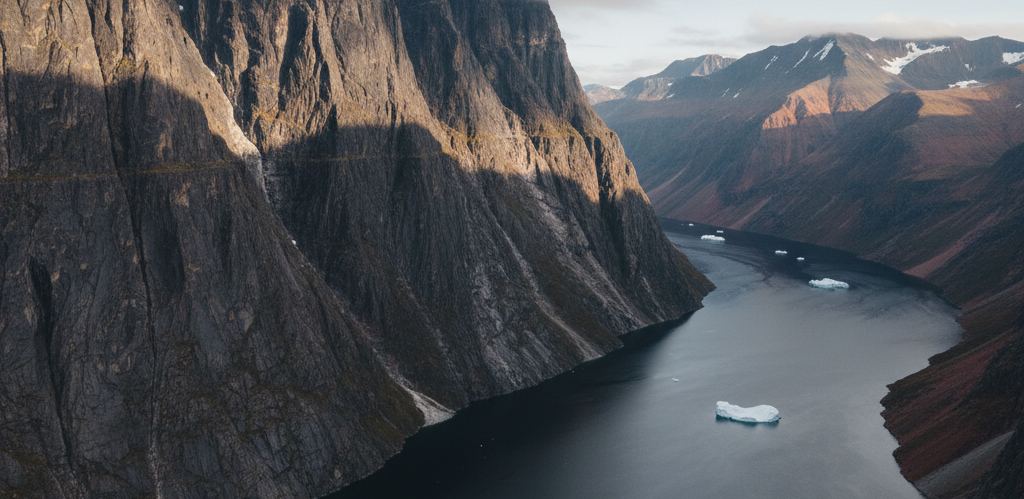
A ten night fjord trip in east Greenland sounds like plenty of time until you look at the numbers. Scoresby Sund opens on the coast at about seventy degrees north. The main channel runs inland roughly 110 kilometers before it splits. The longest of the inner arms, Nordvestfjord, carries the water another 200 kilometers past that. Measured from open sea to the glacier at its head, the system is over 300 kilometers long, and in places the floor lies 1,400 meters below the surface.
The mouth is shallower than the inside. A sill of about 400 meters sits across it. Ice deep enough to touch that sill stops there and stays, sometimes for years, while smaller pieces drift past and out. Ittoqqortoormiit, the one settlement, holds fewer than four hundred people on the north shore near the entrance. Ten nights inside the system is enough to see perhaps a third of it. No route covers all of the arms.
Red sandstone, black basalt, gray gneiss
The rock is not the same from one arm to the next, and that is the part people underestimate beforehand. Nordvestfjord is old gneiss and granite. It goes up 1,000 to 1,800 meters straight out of the water with nothing at the base to give you scale. Turn south into Rodefjord and the walls are Devonian sandstone the color of rust. Rode O, the island inside it, is the same material and goes orange in flat light.
Along the Volquart Boon coast the basalt has cooled into columns, stacked in ranks a few meters wide. On Milne Land the beds are pale and almost horizontal, marine sediment lying more or less as it was laid down. In July the sun sits low for hours instead of setting. The same wall reads brown at nine in the evening, rust at midnight and gray again by four.
Look down at the ground, not up
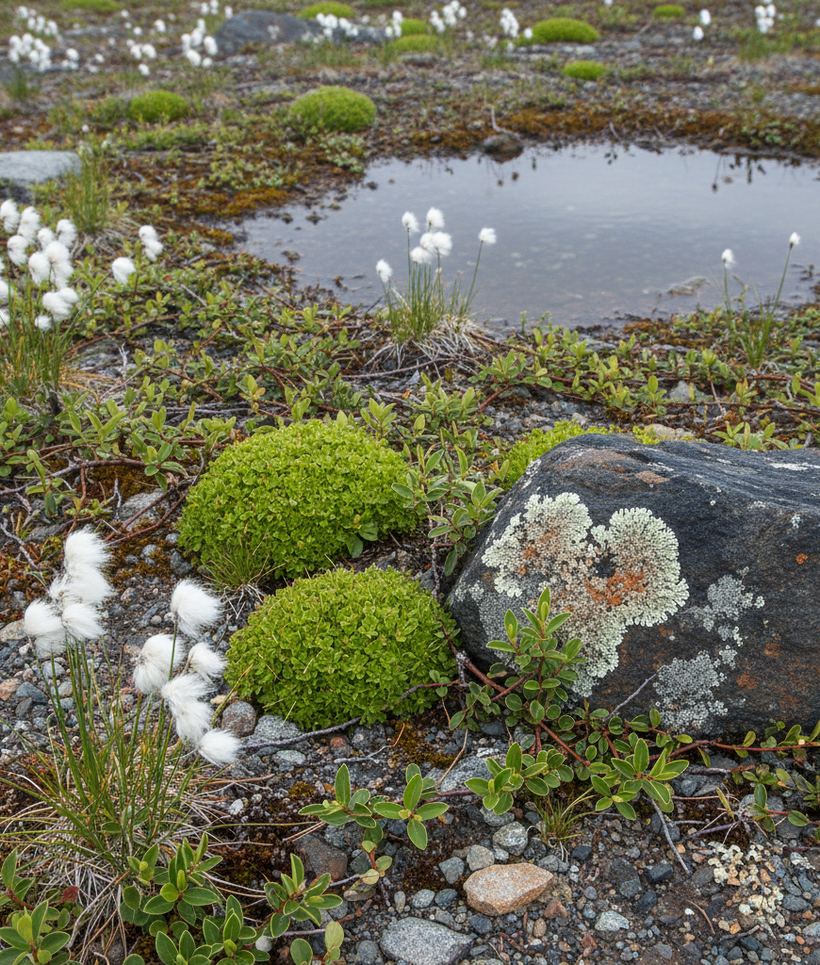
Behind the shoreline the land rises in terraces of loose gravel and then flattens into tundra. Almost nothing on it stands higher than your boot. Arctic willow grows sideways along the surface with leaves you could cover with a thumbnail. Purple saxifrage flowers early and is finished before most people arrive. Moss campion makes tight green cushions on bare grit. Cotton grass marks the wet ground and is easy to find, because it is the only white thing moving.
Lichen on the boulders is worth stopping for. The pale crusts grow a fraction of a millimeter a year, so a patch the width of a palm predates the settlement. Walking is slower than it looks. The surface is frost heaved into low polygons, the hollows hold water, and a kilometer of it takes about twice as long as a kilometer of path.
Fog can cost you three days
This is a weather trip and the weather is not reliable. The gravel strip at Nerlerit Inaat sits near the fjord mouth and fogs in without much warning. A day at either end is normal and three happens. Nothing gets you out of it faster.
Inside the fjord the same cloud sits at 200 meters and takes the walls away entirely. You can spend a full day in a landscape 1,500 meters high and see the bottom tenth of it. Sea ice sometimes holds in the inner arms into the last week of July, which closes Nordvestfjord for that departure and no other. Summer air runs about three to eight degrees Celsius, damp rather than sharp. The operating company sets each day on what it can actually reach, so the order of the days is not fixed and some landings do not happen at all.
Where $6,880 else goes
This departure sits on the $6,880 rung, and it is not alone there. The office keeps every trip at that figure on one page so the number can be seen doing different work in different parts of the world. It does not rank them and will not tell you which is the better buy, because that is not a judgement a figure supports.
The same $6,880 somewhere else entirely
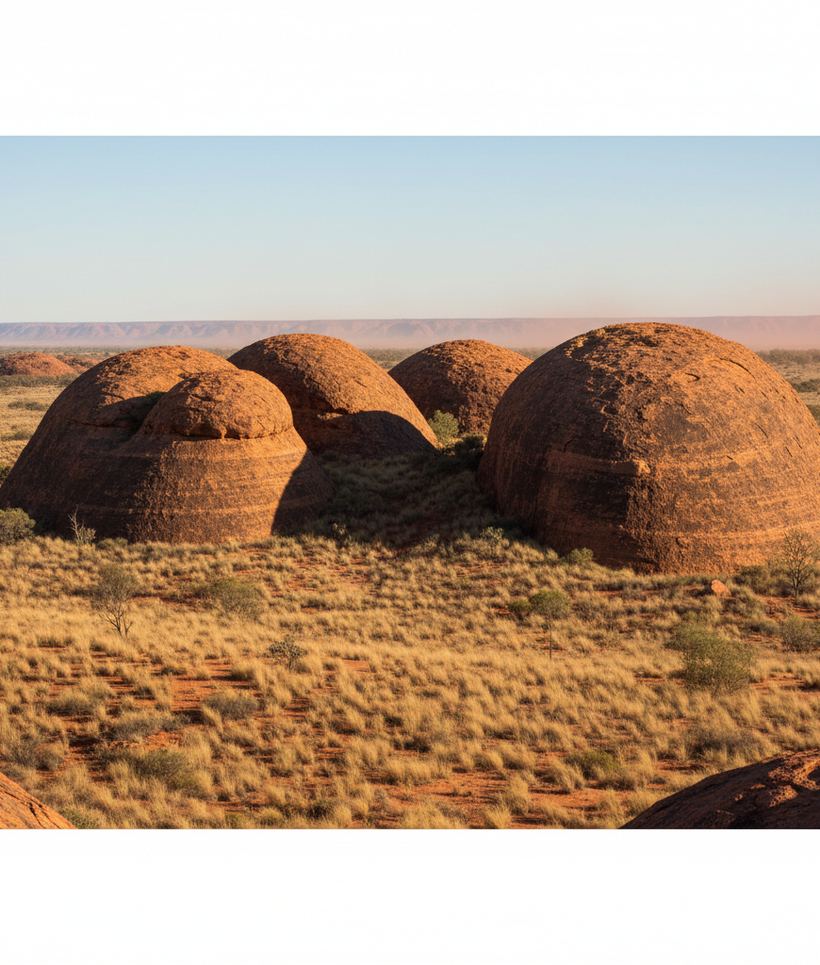
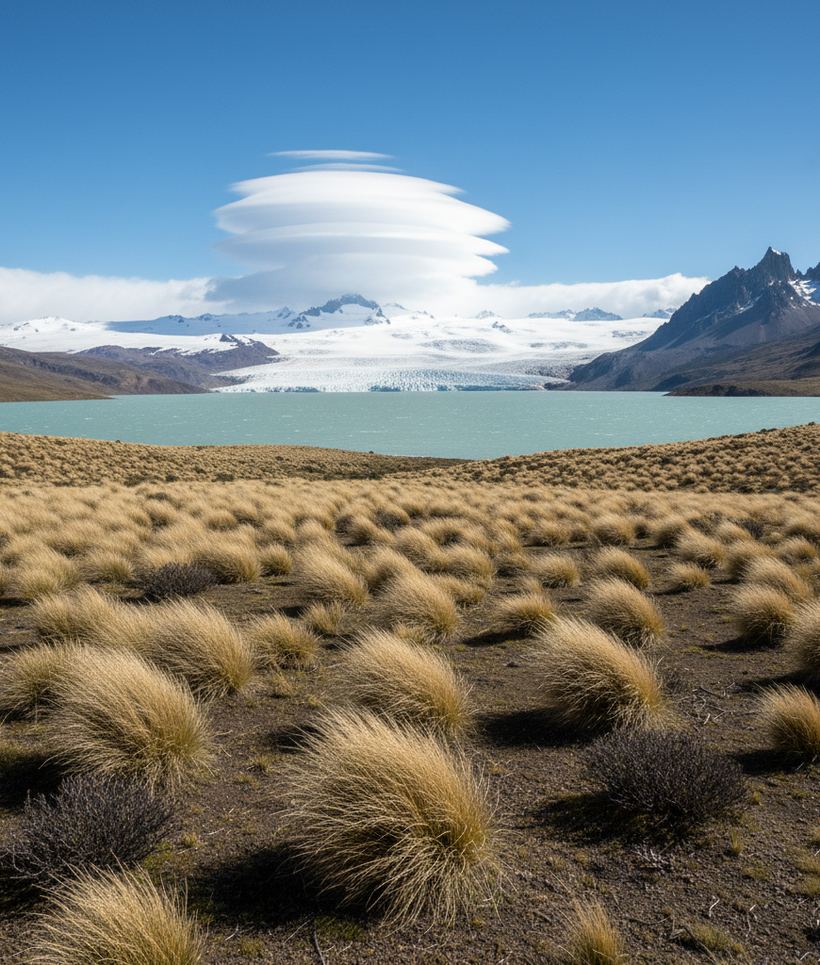
These 2 cost exactly what this one costs, and resemble it in nothing else. That is the point of filing a catalogue by figure. The office sets them out and leaves the choosing to you.
Start from the figure you actually have
Requests are taken every hour of every day. A person reads what this collects and writes back inside one business day. Money never changes hands here, and this office holds no card details of yours at any stage.
Orchard and Oar Bookings LLC
1401 E Broward Blvd, Suite 305Fort Lauderdale, FL 33301
+1 (954) 522-3140Calls run one way only: this office answers what reaches it and starts nothing of its own, by voice or by message.
reservations@orchardandoar.com
No opening times are posted. What is promised instead is the wait: a written request is answered inside one business day, and that is the undertaking the office will be held to.