Figures, dates and what the operator wants up front
- The figure
- from $1,485 per person
- Nights
- 9
- Season
- June to August
- At reservation
- 10 per cent at reservation
The operating company asks for 10 percent of the figure when it confirms the reservation, and the remaining 90 percent 45 days before departure.
Fixed departures
- 12 to 21 June 2027
- 10 to 19 July 2027
- 14 to 23 August 2027
These are dates, not a range to slide around. A departure with no date attached is a different kind of contract altogether and this office does not write those.
Inside the figure
- Nine nights in guesthouses on the shore, two people sharing a room
- Breakfast every day and four cooked evening meals
- A vehicle and driver for the length of the coast
- Entry to Slitere National Park and the walk on the wooded bluff
- The arranged visit to the radio dish at Irbene
Left out
- Flights or any other travel to Latvia and home again
- Lunches, drinks and the smoked fish you will buy at the roadside
- Bicycle hire, if you want one for the forest tracks
- Any insurance, which this desk neither sells nor comments on
Kolka, where two water lines cross
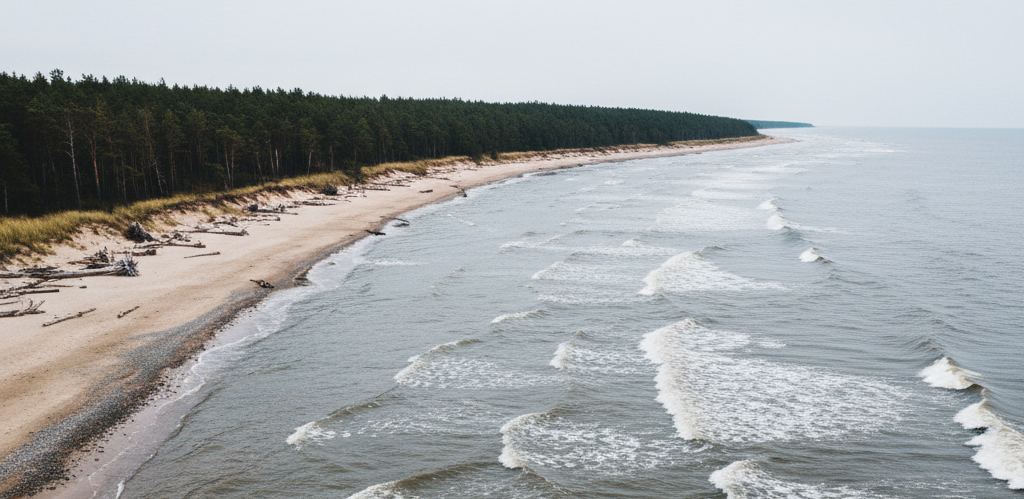
Cape Kolka is the corner of Latvia. West of it lies the open Baltic; east of it lies the Gulf of Riga. The two bodies of water arrive at the point from different directions. On most days you can see the seam. Two sets of waves cross at an angle a few hundred yards out. They break into each other rather than onto the shore.
A sandbank continues underwater for roughly six kilometers past the tip. Ships were lost on it for centuries, which is why the light tower stands on a stone island offshore, not on land. It was finished in 1875, and from the beach it reads as a pale stub on the horizon.
The point itself is low: pale sand, gray stones, driftwood pushed into ridges, and pines starting thirty yards back from the water. Nothing is built at the end of it. You walk out, stand at the seam for as long as you want, and walk back.
Twelve villages and a language that stopped
Between Ovisi and Melnsils lie twelve villages that were Livonian. The names run Luzna, Mikeltornis, Lielirbe, Jaunciems, Sikrags, Mazirbe, Kosrags, Pitrags, Saunags, Vaide, Kolka, Melnsils. Livonian is a Finnic language and is not related to Latvian. The last person who grew up speaking it died in 2013. A few dozen people have learned it since.
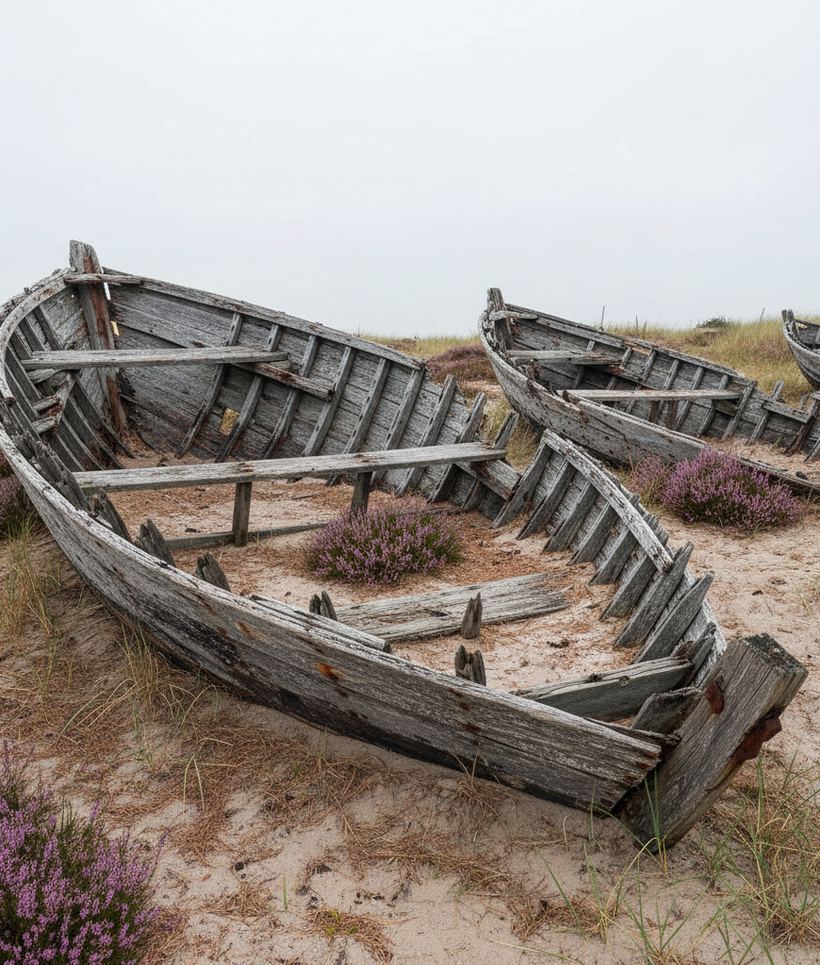
Mazirbe has a community house put up in 1939 with Finnish and Estonian money. It is a plain white building set back from the shore. Behind the village, in the pines, lies a line of abandoned wooden fishing hulls. They rest on sand and needles with their ribs open to the sky. The planks are gray and split, some with iron still in them. Nobody set them there as a monument; the fishery ended and the hulls stayed.
Smoked fish is still sold from sheds along the road, flounder and Baltic herring, hot, in paper. It is the one thing here you should not plan around, because the sheds open when there is fish.
Closed coast, 1945 to 1991
This shore is empty for a political reason. Through most of the Soviet period the whole coast was a border zone. Residents needed a permit and visitors mostly could not come. The sand was raked at night, and boats were counted in and out. Almost nothing was built, and the fishing villages shrank.
Two remains of that get a stop. At Irbene, in the forest, a 32 meter radio dish stands over a settlement that appeared on no map. The apartment blocks are roofless and full of birches now, and the dish itself is used for astronomy. Its scale is hard to judge until you are standing under it.
Inland at Slitere a wooded bluff about twenty meters high runs parallel to the sea for miles. It is the shoreline of a much larger lake that stood here after the last ice. A light tower sits on top of it, five kilometers from any water.
Will the two seas actually show?
The meeting of two seas is a weather event, not a fixture. In flat calm there is no seam, just gray water going out to a gray sky. People who have driven three hours for it stand around looking mildly cheated. Wind from the northwest gives the likeliest chance. We build in two visits for that reason, and we cannot promise either one.
The coast is repetitive by design. Pine, sand, a track, a clearing, pine again, for fifty kilometers. Several of the twelve villages amount to a sign, four houses and a path down to the water. If you need a sight every hour, this is the wrong shore.
The link roads between villages are gravel, ridged in hard corrugations, and you will be shaken. Mosquitoes in the wet hollows behind the dunes are serious from mid June to early August, and dusk is the worst of it. The sea reaches about 18 degrees in July, which is colder than the word summer suggests.
Where $1,485 else goes
This departure sits on the $1,485 rung, and it is not alone there. The office keeps every trip at that figure on one page so the number can be seen doing different work in different parts of the world. It does not rank them and will not tell you which is the better buy, because that is not a judgement a figure supports.
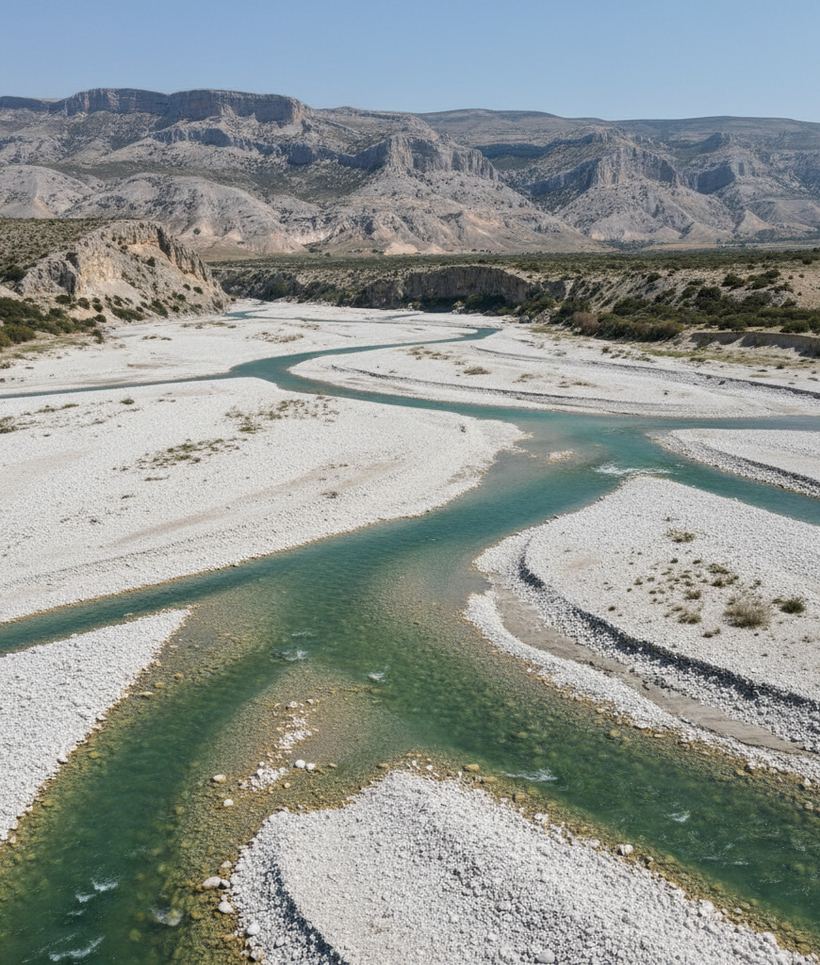
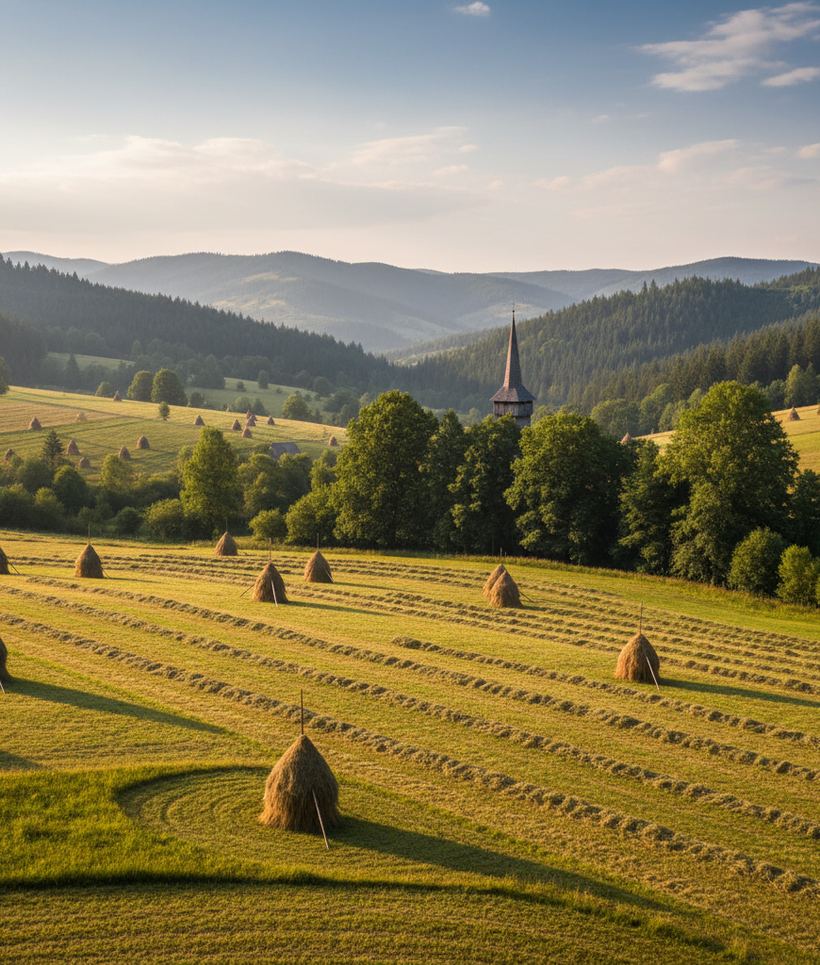
The same $1,485 somewhere else entirely
These 3 cost exactly what this one costs, and resemble it in nothing else. That is the point of filing a catalogue by figure. The office sets them out and leaves the choosing to you.
Start from the figure you actually have
Requests are taken every hour of every day. A person reads what this collects and writes back inside one business day. Money never changes hands here, and this office holds no card details of yours at any stage.
Orchard and Oar Bookings LLC
1401 E Broward Blvd, Suite 305Fort Lauderdale, FL 33301
+1 (954) 522-3140Calls run one way only: this office answers what reaches it and starts nothing of its own, by voice or by message.
reservations@orchardandoar.com
No opening times are posted. What is promised instead is the wait: a written request is answered inside one business day, and that is the undertaking the office will be held to.