Figures, dates and what the operator wants up front
- The figure
- from $3,420 per person
- Nights
- 10
- Season
- October to March
- At reservation
- 100 per cent at reservation
The operating company asks for the full figure when the reservation is confirmed, so no balance falls due later.
Fixed departures
- 16 to 26 October 2027
- 4 to 14 December 2027
- 19 to 29 February 2028
These are dates, not a range to slide around. A departure with no date attached is a different kind of contract altogether and this office does not write those.
Inside the figure
- Ten nights of accommodation, five of them in mountain camps
- Park entry, the local guide and the park scout required by the authority
- Cooked meals on all walking days
- Pack animals and camp staff
- Road transfers between Gondar and Debark
Left out
- Flights to and from Ethiopia, which the figure does not cover
- The domestic flight or drive to Gondar
- Travel insurance of any kind, which this office does not sell
- Drinks, tips and personal spending
A walk along the rim
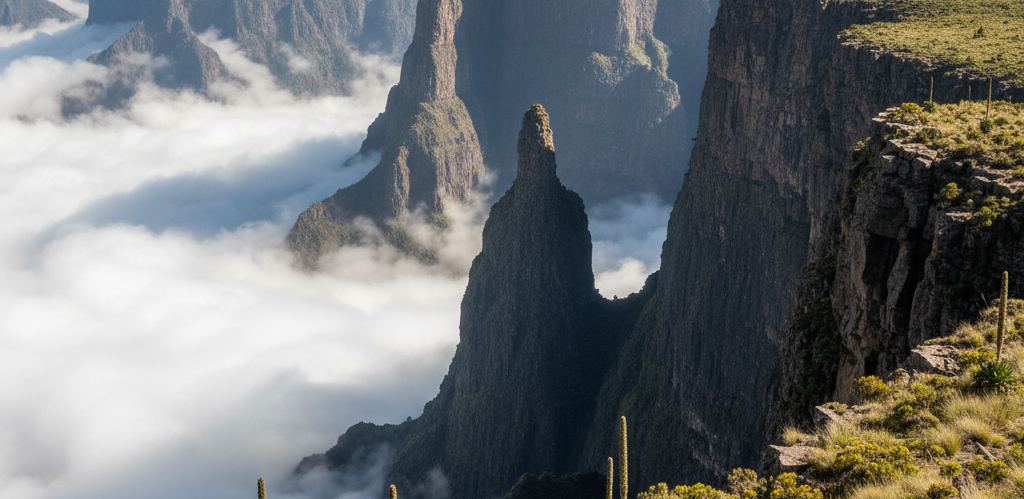
The escarpment runs for about forty kilometers along the northern edge of the Ethiopian plateau. On one side there is farmland at three thousand two hundred meters. On the other there is nothing for two thousand meters straight down.
The route stays on top. Camps sit at Sankaber, Geech and Chennek, at roughly three thousand two hundred, three thousand six hundred and three thousand six hundred meters. Walking days run four to seven hours. The ground is grass, dust and loose basalt. None of it is technical, but the air holds about a third less oxygen than at sea level, and that is the whole difficulty.
One optional day crosses the Bwahit pass at four thousand two hundred meters. It is a long uphill on a track, with no difficulty and no shelter either.
Gelada live along the rim in bands of several hundred. They feed on grass and will let a quiet group sit twenty meters off for an hour. Walia ibex appear on the cliffs below Chennek, though not to order.
How the escarpment came apart
The rock is flood basalt, poured out about thirty million years ago in flows that stacked up three kilometers thick. It is one of the largest sheets of its kind in Africa. Then the land lifted, the rift opened to the east, and rivers started cutting north into the pile.
They are still cutting. What you look at from the rim is the retreating edge of that stack. The pinnacles standing alone in the middle distance are pieces of former plateau that the streams have not finished removing. Some are wider at the top than at the base, which looks wrong and is only a harder layer outlasting a softer one.
The Jinbar river goes over the rim near Geech and falls roughly five hundred meters. In October it is one heavy thread. By February it is a wet stain on the cliff.
Layers read clearly from any viewpoint. Dark bands are lava flows. Red bands between them are old soils that formed in the gaps between eruptions.
Frost at dawn, dust by ten
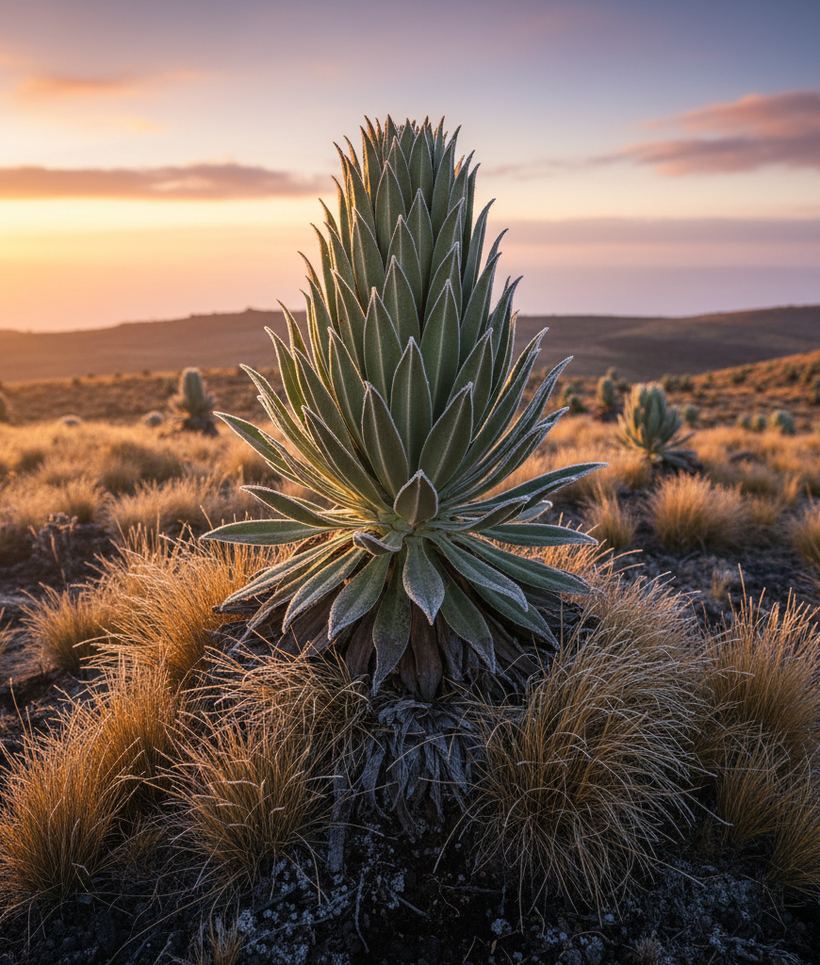
Nights at Geech and Chennek drop below freezing from November into January. Water left outside has ice on it at six. White frost lies along every blade of tussock grass, and along the giant lobelias, which are the strangest plants on the mountain.
A lobelia here is a single column two to five meters tall with a tight rosette of narrow leaves at the head. It grows for years, flowers once and dies. The rosette folds shut at night to protect its center, holds water inside itself, and opens again once the sun reaches it. In frost the outer leaves stiffen and rim white.
By ten in the morning the frost has gone and the dust has started. Camps are dry from December onward and the ground powders under boots. Fleece at dawn, shirt at noon, fleece again by four. That is the pattern for all ten days, and packing for it matters more than any other preparation you will make.
The road from Gondar takes four hours
Getting there costs most of a day, and that day is not scenic. Gondar to Debark is about one hundred kilometers. Some of it is paved, some is not, and the roadworks move. Four hours is normal and five is not unusual. The last stretch climbs steadily, and passengers who felt fine in Gondar sometimes do not at the park gate.
Debark is a working market town at two thousand eight hundred meters. It is not pretty. The night there exists so that the group sleeps once at altitude before walking.
Camps and lodges are cold. Rooms are not heated. Camp toilets are pits. Washing is a bowl of warm water more often than a shower.
The other thing to say plainly is that this region has had periods of unrest since 2023 and roads have closed at short notice. The operating company reroutes or cancels when that happens. Ethiopia also keeps its own calendar and its own clock, so times are worth confirming twice.
Where $3,420 else goes
This departure sits on the $3,420 rung, and it is not alone there. The office keeps every trip at that figure on one page so the number can be seen doing different work in different parts of the world. It does not rank them and will not tell you which is the better buy, because that is not a judgement a figure supports.
The same $3,420 somewhere else entirely
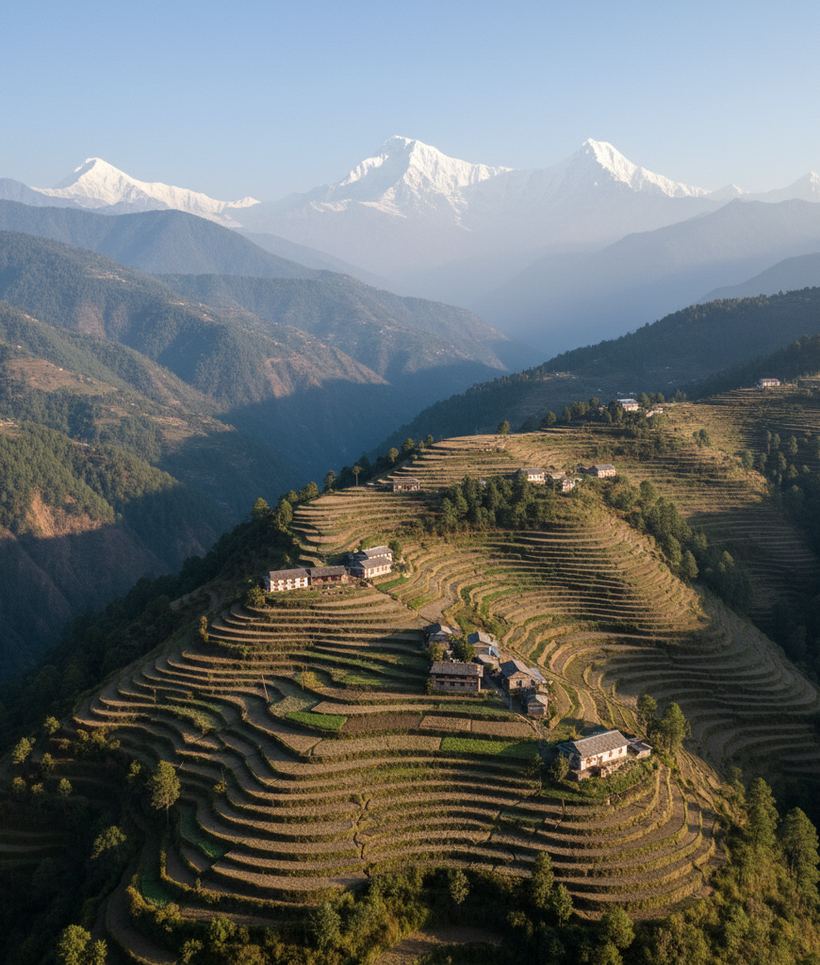
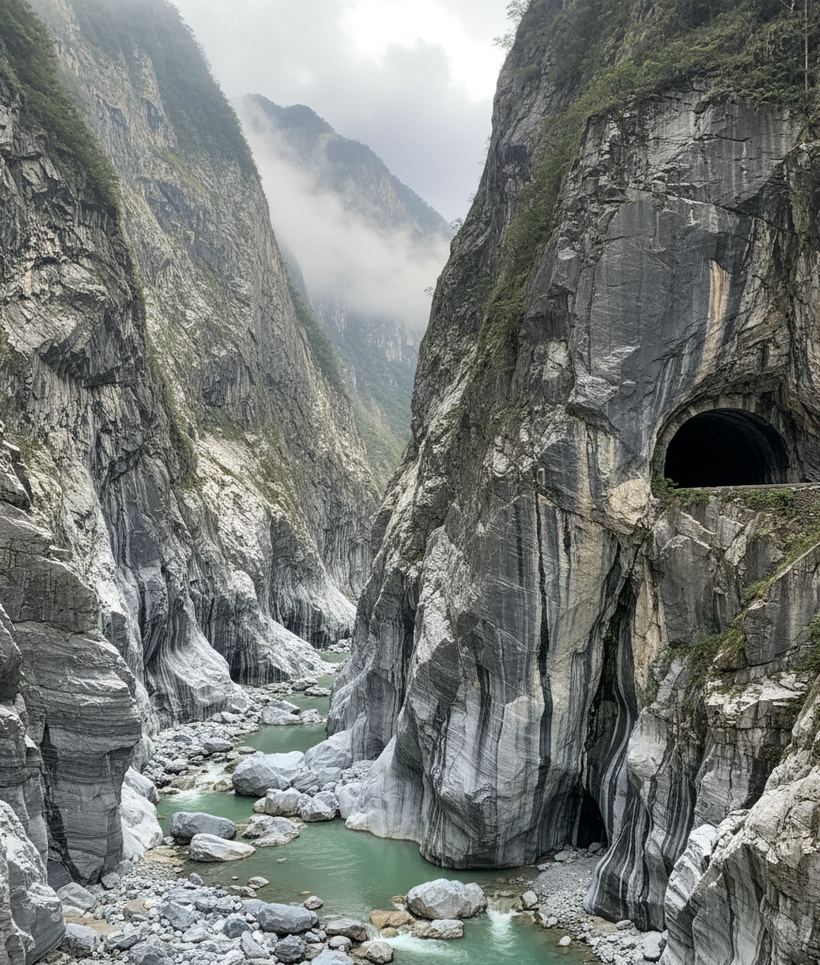
These 3 cost exactly what this one costs, and resemble it in nothing else. That is the point of filing a catalogue by figure. The office sets them out and leaves the choosing to you.
Start from the figure you actually have
Requests are taken every hour of every day. A person reads what this collects and writes back inside one business day. Money never changes hands here, and this office holds no card details of yours at any stage.
Orchard and Oar Bookings LLC
1401 E Broward Blvd, Suite 305Fort Lauderdale, FL 33301
+1 (954) 522-3140Calls run one way only: this office answers what reaches it and starts nothing of its own, by voice or by message.
reservations@orchardandoar.com
No opening times are posted. What is promised instead is the wait: a written request is answered inside one business day, and that is the undertaking the office will be held to.