Figures, dates and what the operator wants up front
- The figure
- from $5,260 per person
- Nights
- 9
- Season
- June to early September
- At reservation
- 50 per cent at reservation
The operating company asks for half of the figure to hold the dates, and the remainder falls due sixty days before the start.
Fixed departures
- 18 to 27 June 2027
- 23 July to 1 August 2027
- 27 August to 5 September 2027
These are dates, not a range to slide around. A departure with no date attached is a different kind of contract altogether and this office does not write those.
Inside the figure
- Nine nights of lodging, most of it in cabins near the mill site
- All ground transport from Anchorage, including the gravel road in and out
- A full day on the glacier with a guide, crampons and poles
- The guided walk inside the fourteen story mill building
- Breakfast each morning and food carried for the walking days
Left out
- Flights to Alaska; the figure starts and ends in Anchorage
- Evening meals, which are taken wherever you like in the town
- The small aircraft flight over the icefield, arranged locally by an operator there
- Insurance of any kind, which this desk neither sells nor comments on
Nine nights at the end of a fifty nine mile road
Pavement ends at Chitina. From there the road runs fifty nine miles east along the bed of a railway abandoned in 1938, and the old ties are still under the gravel. Spikes work their way up through the surface every summer and cut tires. Two and a half hours is a normal time for the fifty nine miles, and that is the correct speed rather than a cautious one.
At mile seventeen the road crosses the Kuskulana on a single lane steel bridge from 1910. The deck sits two hundred and thirty eight feet above the water and there is no room to pass. Twelve miles further on, a wooden trestle eight hundred and eighty feet long stands over a swamp. It went up in eight days in January 1911.
The road stops at a river. Vehicles are left on the west side and everyone crosses on a footbridge. The town is half a mile beyond it, and the mill site four miles past that.
What the mill site is now
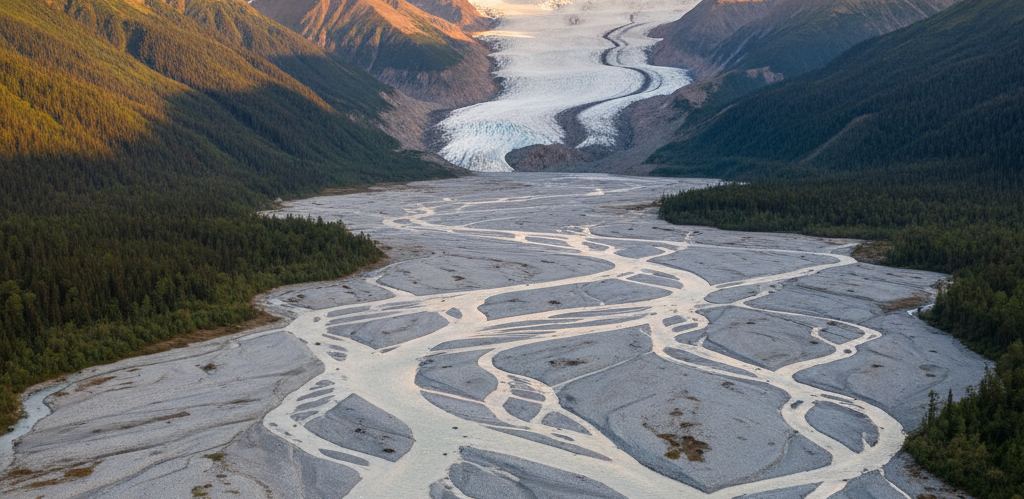
Four and a half miles above the footbridge, a red mill building steps down the hillside in fourteen stages. Copper concentrate was made in it from 1911 until 1938. When the ore ran thin the operation closed inside a few weeks, and almost nobody came back for fifty years.
The bunkhouses, the power plant and the ammonia leaching plant are all still standing. The park owns the site now and is stabilizing it rather than restoring it, which turns into a real distinction once you are inside. Floors are patched only where a floor was needed. Most window frames hold no glass. The tram towers still run up the mountain with their cables on them, going nowhere.
Guided walks go into the mill itself. You climb it from the bottom, up ladders and past hoppers, in a light that comes sideways through gaps in the siding. The building is not quiet. Wind moves through fourteen floors of it at once.
Walk out onto grey ice
The glacier sits about two miles from the mill site along an old wagon road, and then you step off the moraine onto the ice itself.
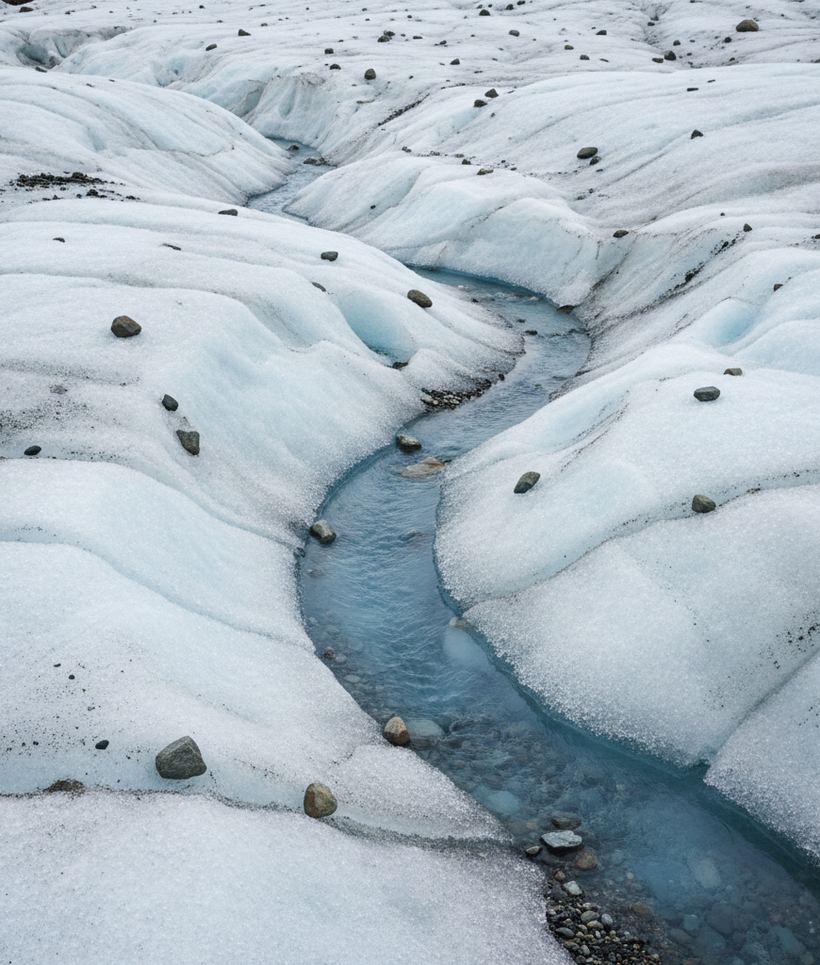
The first part of it is not white. It is grey, under a skin of rock and grit that the ice carries and drops, and from a distance it reads as a gravel slope rather than a glacier. A quarter mile out the rock thins and the ice comes up clean and hard, ridged in long lines, with meltwater cutting channels a foot deep and running fast enough to hear. Crampons go on there and stay on.
Pools stand in the low spots, in a blue with no equivalent above the ice. Some drain through holes that go down further than a light will reach, and guides keep groups well clear of those. Nine nights allows one full day out here, which is enough to get well past the grey and back before the light goes.
Rain, dust and a flight that often does not go
August is the wet month on this side of the range. Six days in ten can carry rain, the road turns dark and greasy, and the walking happens in it because the schedule cannot wait on weather. Boots that are not waterproof will not dry overnight in a cabin.
In dry weather the problem inverts. The road throws a dust plume that hangs in the air a full minute after a vehicle has passed, and everything in the back of yours wears a coat of it by Chitina.
The small aircraft flight over the icefield is the part most people want and the part least likely to happen. It is sold by an operator in the town, not by this office, and this office arranges no carriage by air. Small aircraft need a ceiling, and these mountains make their own cloud most afternoons. Assume it will not fly and treat it as a bonus if it does. There is no cell service past Chitina.
Where $5,260 else goes
This departure sits on the $5,260 rung, and it is not alone there. The office keeps every trip at that figure on one page so the number can be seen doing different work in different parts of the world. It does not rank them and will not tell you which is the better buy, because that is not a judgement a figure supports.
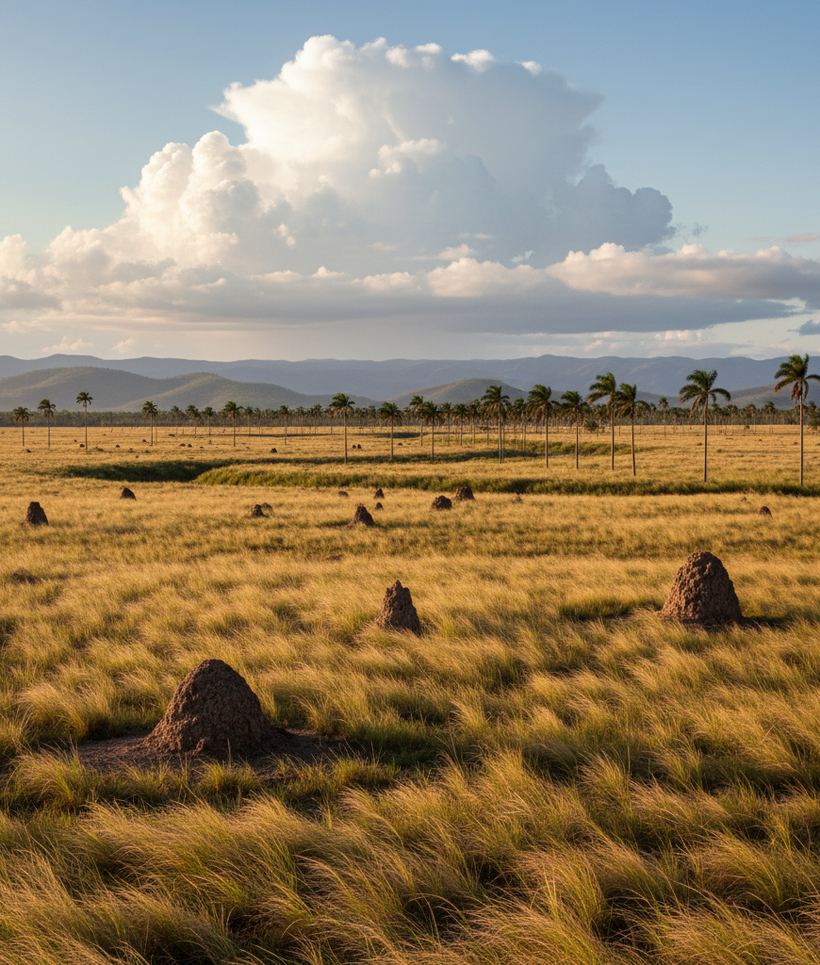
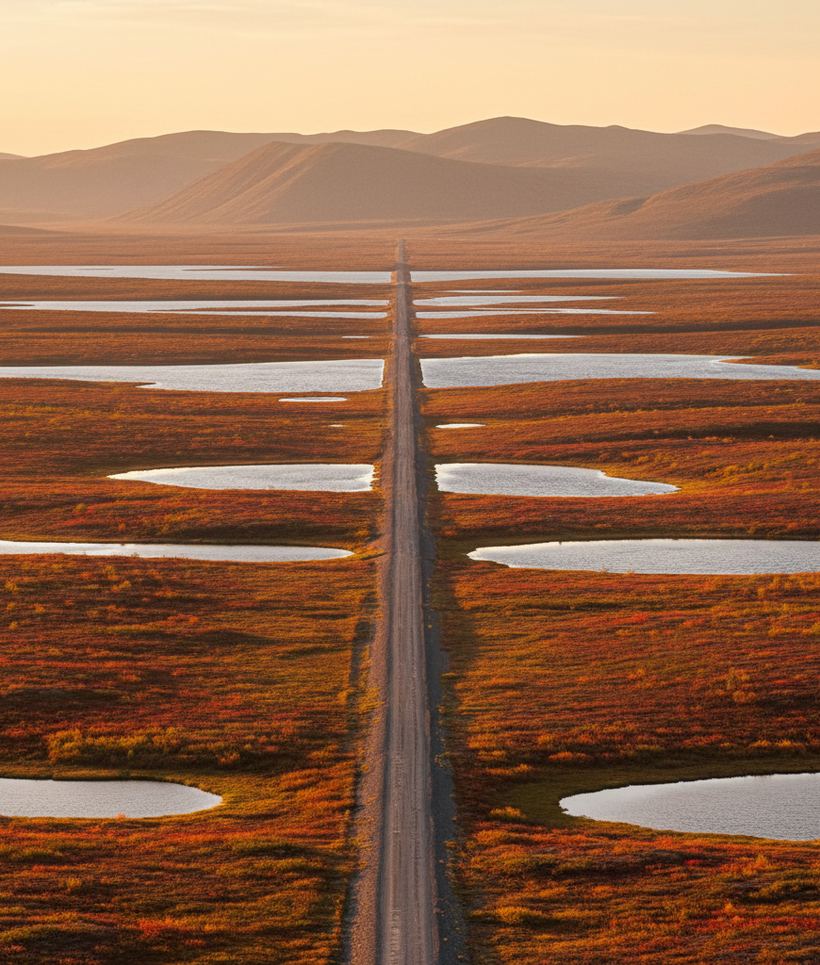
The same $5,260 somewhere else entirely
These 2 cost exactly what this one costs, and resemble it in nothing else. That is the point of filing a catalogue by figure. The office sets them out and leaves the choosing to you.
Start from the figure you actually have
Requests are taken every hour of every day. A person reads what this collects and writes back inside one business day. Money never changes hands here, and this office holds no card details of yours at any stage.
Orchard and Oar Bookings LLC
1401 E Broward Blvd, Suite 305Fort Lauderdale, FL 33301
+1 (954) 522-3140Calls run one way only: this office answers what reaches it and starts nothing of its own, by voice or by message.
reservations@orchardandoar.com
No opening times are posted. What is promised instead is the wait: a written request is answered inside one business day, and that is the undertaking the office will be held to.